
Why Revenue is the #1 Issue for (most) Independent Schools
This summer, I had the privilege of leading retreats, recording podcasts, launching business strategy groups, and engaging in numerous one-on-one conversations with school heads and trustees.
The conversations were wide-ranging, but one theme kept surfacing again and again: revenue.
And it makes sense.
The gap between tuition and the actual cost of running a school is only widening, as rising expenses force schools to find more ways to close the gap. Even schools with healthy waitlists and strong advancement programs are asking tough questions:
How do we generate new revenue streams to relieve the pressure on tuition?
What opportunities align with our mission, rather than distract from it?
And how do we avoid quick fixes that add complexity but little impact?
Why the Old Framework No Longer Fits
When I first released the Independent School Business Competencies a year and a half ago, "enrollment and advancement" sat together as one category.
Over the summer, it became clear that framing was too narrow.
Enrollment and advancement are both critical. But they're just two pieces of a much larger puzzle, one that is becoming increasingly complicated as schools search for sustainable revenue solutions. Grouping them together undersells the scope of the challenge and obscures the opportunity.
So I made a change.
Introducing Revenue as a Standalone Competency
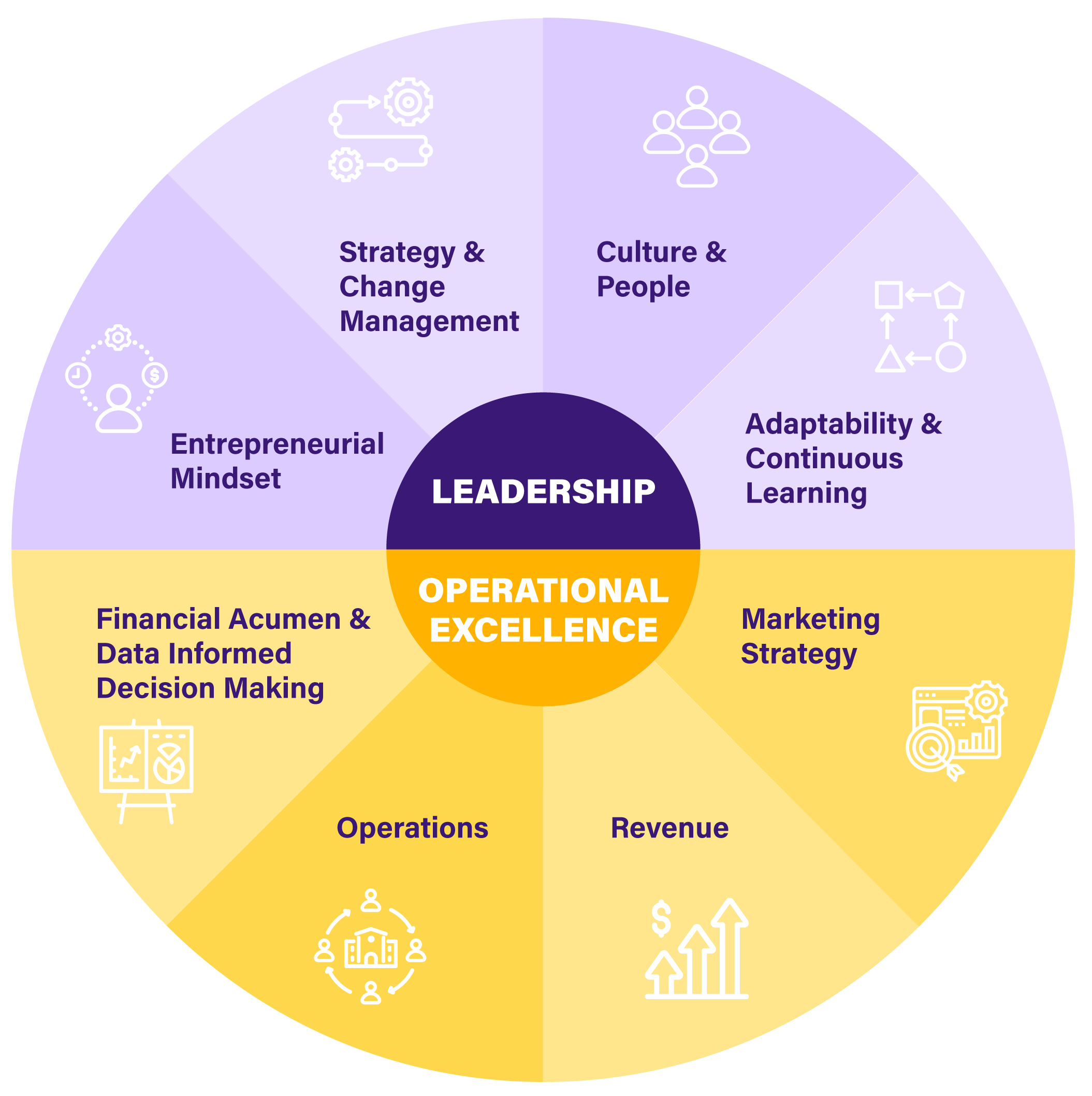
Revenue now stands as its own competency in the MoonshotOS framework.
That shift isn't cosmetic. It reflects a fundamental reality: the financial model of the independent school is under pressure from multiple directions at once, and the leaders who thrive will be the ones who treat revenue strategy with the same rigor they bring to curriculum, culture, and operations.
Enrollment and advancement remain critical. But schools must also find mission-aligned ways to generate revenue through auxiliary programs, partnerships, and other opportunities. Identifying and deploying those solutions is no longer optional. It's critical.
The Eight Business Competencies for Independent School Leaders
The MoonshotOS Business Competencies are the framework I use to help school leaders assess their business fluency and identify where to focus. With this update, Revenue joins the other seven competencies as a distinct area of practice:
Strategy and Change Management
Culture and People
Adaptability and Continuous Learning
Entrepreneurial Mindset
Financial Acumen and Data-Informed Decision Making
Marketing Strategy
Operations
Revenue (updated)
If you want to see where you stand across all eight, the Business Competency Self-Assessment takes about ten minutes and gives you a clear picture of your strengths and gaps.
Mission Alignment Is Not Optional
Before jumping into tactics, there's a principle worth stating plainly.
If a new revenue idea isn't mission-aligned, I don't like its chances of succeeding.
That's not idealism. It's pragmatism. Independent schools earn trust, enrollment, and philanthropic support because of what they stand for. Revenue strategies that drift from the mission tend to generate internal friction, external confusion, and rarely perform as the initial projections suggested.
The schools doing this well aren't just asking "Can we make money doing this?" They're asking "Does this make us more of what we're trying to be?"
Those are very different questions.
A Simple Framework for Evaluating New Revenue Ideas
One of the most common things I hear from heads is that they have no shortage of ideas. What they lack is a clear way to evaluate them.
Here's a four-question framework I use to help separate the promising ideas from the distractions. Run any new revenue concept through these four lenses before you invest time and resources into deeper planning.
1. Alignment
Does this revenue stream strengthen your mission and values, or does it pull resources and attention away from your core work?
2. Demand
Who is the audience for this, and does it leverage what makes your school genuinely distinctive? Ideas that depend on capabilities you don't yet have are much harder to execute than those that amplify what you already do well.
3. Investment
What does it actually cost to do this well? Time, staff capacity, capital, and leadership attention are all real resources. Undercounting them is where many revenue initiatives go sideways.
4. Risk and Return
What's the realistic upside, and what are the risks that need to be managed? Include reputational risk alongside financial risk. For independent schools, both matter.
Run any idea through these four lenses, and you'll quickly see whether it's worth deeper validation or best left on the sidelines.
Where to Look for Mission-Aligned Revenue
There's no universal answer here, and I'm skeptical of anyone who tells you there is. The right revenue strategy depends on your school's size, market position, competitive environment, and existing infrastructure.
That said, some of the most productive areas I see schools exploring include:
Auxiliary programs that extend the school's expertise to new audiences (summer programs, community education, professional development for educators)
Facility utilization that generates income during underused hours or seasons without compromising the campus experience
Partnerships with aligned organizations that create shared value without diluting the brand
Expanded advancement strategies that go beyond the annual fund to include planned giving, major gifts, and corporate partnerships
If you're looking for a dedicated resource in this space, I recommend exploring SPARC. They do excellent work helping schools identify and grow auxiliary revenue that not only generates dollars but also advances mission.
Revenue Strategy Starts with Seeing Your Business Model Clearly
One thing I've learned working with school leaders is that revenue strategy conversations are most productive once a school has a clear picture of its current business model. Who are your real customers? What drives your costs? Where is the margin in your model, and where is it thin?
Without that foundation, revenue conversations tend to stay at the surface. With it, you can make decisions with confidence.
This is exactly what the Business Model Retreat is designed to do: give your leadership team and board a shared, honest picture of how your school actually generates and consumes resources, and a clear path to prioritize what to do next.
The Bottom Line
Revenue isn't just a financial necessity. It's a strategic imperative.
The schools that build real competency here, not just a short-term fix but a durable, mission-aligned revenue strategy, will have more options, more resilience, and more capacity to invest in what they're really trying to build.
I'd love to hear how you're approaching revenue at your school. I'm always in learning mode.
Explore the Full MoonshotOS Framework
If this post raised questions about your school's business model, a good next step is the Business Competency Self-Assessment. It takes about ten minutes, covers all eight competencies, and gives you a concrete starting point for the conversation.