
So You Want to Be a Head of School? Here Are the 8 Business Competencies You Need to Master
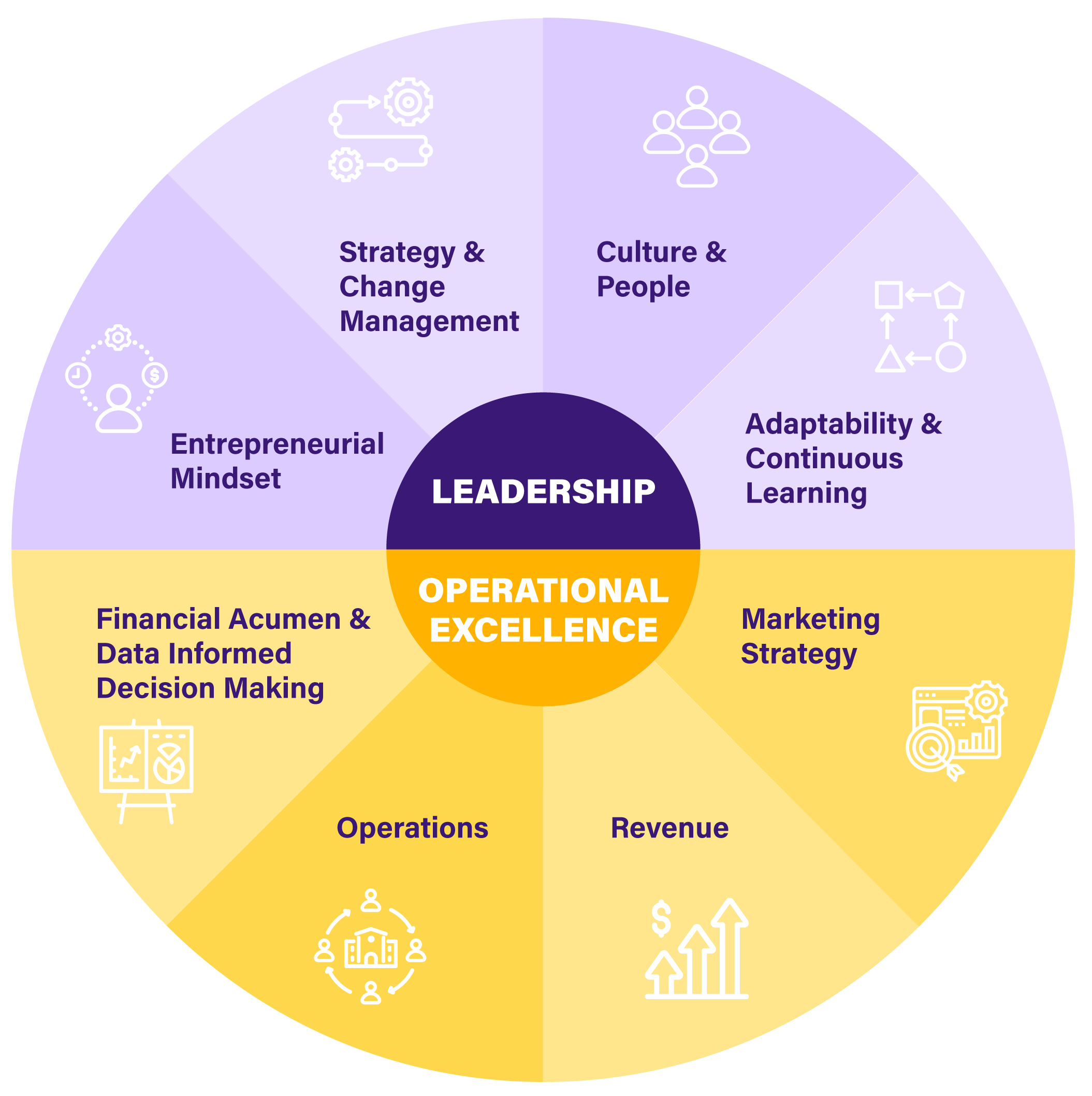
The Eight Business Competencies Every Independent School Leader Needs
Being a strong instructional leader used to be enough.
It isn't anymore.
Independent school heads are now expected to make decisions that directly shape the long-term health of their schools. Enrollment strategy. Tuition modeling. Staffing tradeoffs. Capital planning. Board alignment. These are business decisions, and they require business fluency.
The challenge is that these skills are rarely developed through traditional leadership preparation. Most aspiring leaders build deep expertise in curriculum, culture, and people. The business side gets learned on the job, often under pressure, with limited support.
That's why I built a framework around eight core business competencies for independent school leaders. These are the foundational areas every leader needs to understand, whether you're running a division, stepping into a senior role, or preparing for a headship.
This isn't about becoming a CFO. It's about being fluent enough in the business of school to lead clearly and make decisions with confidence.
The Eight Competencies
1. Strategy and Change Management
Can you align your team around a clear direction? Do you have a system for setting priorities, tracking progress, and adjusting when circumstances shift?
Strategy is not a document. It's a discipline. Schools that thrive are the ones where the head knows how to move from vision to execution, and where the leadership team is rowing in the same direction.
This competency includes how you manage change, how you communicate priorities across the organization, and how you hold yourself and your team accountable to the work that matters most.
2. Culture and People
Strong schools are built on strong teams. That requires more than hiring good people. It means clarity around roles and expectations, structured feedback processes, intentional leadership development, and an honest look at what your culture actually rewards.
Culture doesn't run on vibes. It runs on structure. Leaders who understand that build organizations that retain great educators and attract more of them.
3. Adaptability and Continuous Learning
Change is constant in independent schools right now. Demographic shifts, competitive pressure, financial constraints, emerging technology. Leaders who thrive in this environment are the ones who stay curious, gather feedback, and are willing to evolve their thinking.
Iteration isn't a buzzword. It's a survival skill. This competency is about building the capacity to learn your way through uncertainty rather than waiting for certainty that may never come.
4. Marketing Strategy
Marketing isn't just a job for the communications office. Every senior leader needs to understand what drives demand for the school, how to articulate the school's value to prospective families, and how your brand connects with the families you want to attract.
This competency also shows up in how you communicate internally. Clear, consistent messaging builds trust. Inconsistent messaging creates confusion. Both are strategic outcomes.
5. Advancement and Enrollment Management
Can you read the data behind enrollment trends and giving patterns? Can you explain what's driving yield, or why donor retention is up or down? These are essential skills, not just for advancement professionals, but for everyone at the leadership table.
Heads of school who understand what's underneath the numbers are better positioned to ask the right questions, make smarter resource decisions, and spot problems before they become crises.
6. Operations
From scheduling to facilities to technology systems to vendor management, operational decisions accumulate. They rarely feel strategic in the moment, but they add up to either a school that runs smoothly or one that constantly puts out fires.
Leaders who understand how operations support the mission are better equipped to lead cross-functional work, evaluate tradeoffs, and advocate for the right investments.
7. Financial Acumen and Data-Informed Decision Making
You don't have to love spreadsheets, but you need to understand what your financial model is telling you. That means being able to read a budget and financial statements, ask thoughtful questions of your CFO or business manager, and make decisions grounded in data rather than instinct alone.
This competency matters at every level of leadership, not just for heads. Division directors, department chairs, and admissions leaders all make decisions that have financial consequences. Understanding the model helps everyone lead better.
8. Entrepreneurial Mindset
The schools that are built to last are the ones that experiment, test assumptions, and adapt. Entrepreneurial thinking means identifying opportunities before they become obvious, piloting new approaches before committing fully, and building a culture where learning from failure is expected.
This isn't about chasing trends. It's about being proactive rather than reactive when the environment around you keeps shifting.
Why This Framework Matters
Whether you're an aspiring head, a rising administrator, or a current leader working to sharpen your skills, developing fluency across these eight competencies changes how you show up in every leadership context.
It helps you build schools that are financially sustainable and structurally sound. It helps you align your team around shared priorities. It gives you the language to lead clearly at the board table, in budget conversations, and in strategic planning sessions.
And perhaps most importantly, it reduces the amount of time you spend reacting to problems that stronger systems and sharper thinking could have prevented.
How to Know Where You Stand
Not sure where to focus first? A good starting point is taking an honest look at which of these eight areas feels most uncertain or underdeveloped.
If you want a structured way to do that, the Business Competency Self-Assessment at MoonshotOS walks you through 40 questions across all eight areas and gives you a clear picture of where you're strong and where there's room to grow. It takes about 10 minutes.
Where to Go From Here
These eight competencies are the foundation of everything built inside Moonshot Lab. Every session, case study, framework, and coaching conversation is grounded in this framework.
If you want practical tools, real-world examples, and a community of peers who are working through the same challenges, Moonshot Lab is worth a look. There's a membership option for individual leaders and one for full school teams.
If you're working at a bigger scale, or if your school is ready to build a strategy that's grounded in your actual business model, take a look at the School Operating System and the Strategy + School Operating System. Those engagements start with a deep look at where your school stands across these same competencies, and build from there.
The business side of school leadership is learnable. You just need the right framework, the right support, and the commitment to build it over time.