Independent School Predictions for 2026

It’s been an incredible year working with schools across the country.
Through Moonshot Lab, on-site retreats, and longer-term operating system work, I’ve had a front-row seat to how leadership teams are thinking, where they’re feeling pressure, and where real momentum is starting to build.
As we close out 2025, I’ve found myself reflecting less on what schools struggled with this year and more on where I sense focus and energy will need to shift in 2026.
Some of this will sound familiar.
Some of it may feel less obvious.
All of it is grounded in conversations with heads, leadership teams, and boards who are trying to stay ahead rather than simply keep up.
Here are a few areas I believe will matter even more in 2026.
1. A deeper commitment to auxiliary revenue
The gap between what it costs to educate a child and what tuition covers continues to widen.
That pressure is not easing.
Traditional levers like annual fund growth, endowment draw, and tuition adjustments still matter, but I’m seeing a much stronger appetite to go further on auxiliary revenue.
Not just adding programs, but building thoughtful, mission-aligned offerings that serve both internal and external communities.
Schools are asking harder questions about scale, margins, staffing, and brand alignment.
The ones that do this well will not only help underwrite costs, they’ll also expand relevance and reach.
SPARC has been doing exceptional work helping schools think more rigorously about how to design, price, and operate auxiliary programs.
What they model well is that auxiliary revenue is not a nice-to-have.
It is a real opportunity to help fund and grow the school when approached with clarity and discipline.
2. The rising importance of the head as CEO
At the board level, I continue to see a shift in how future heads of school are evaluated.
There is growing acknowledgment that heads are CEOs running complex organizations, not just senior educators.
That means business fluency is no longer a nice-to-have.
Strategy, financial acumen, talent management, operations, revenue, and marketing are becoming core expectations, especially in times of uncertainty.
If you are a new head or an aspiring one, this is the moment to double down on building these skills deliberately, not just through trial and error.
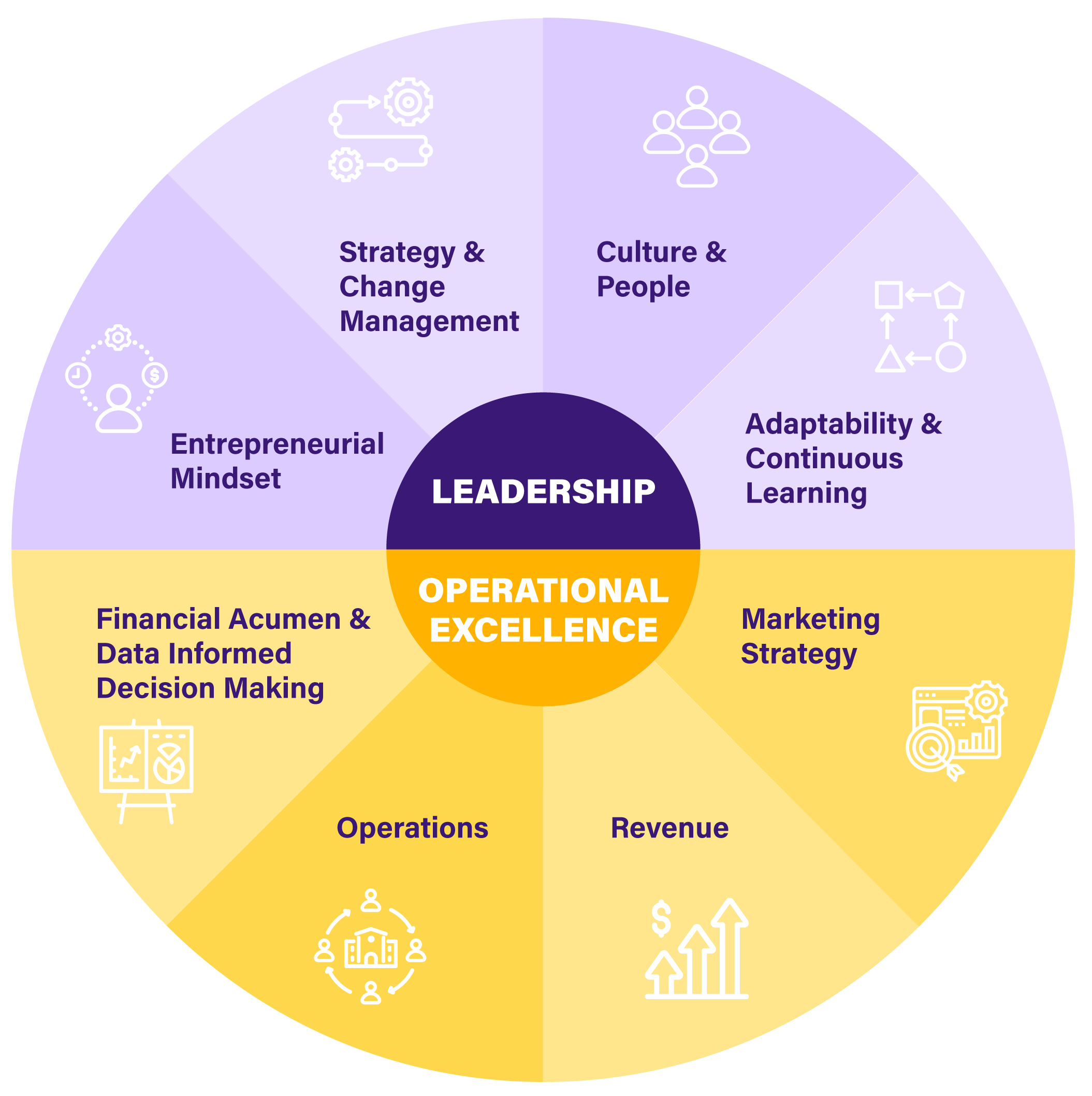
Inside Moonshot Lab, I teach eight core competencies that consistently show up as differentiators in strong leaders:
Entrepreneurial mindset
Strategy and change management
Culture and people
Adaptability and continuous learning
Financial acumen and data-informed decision-making
Operations
Revenue
Marketing strategy
I’ve included the competency graphic below so you can self-assess where you’re strong and where you may want to invest next, whether you work with me or not.
3. Closing the Gap Between Strategy and Execution
Many schools have solid strategic plans. Fewer have the operating rhythm to execute them consistently.
I expect to see more focus on how teams meet, decide, track priorities, and follow through.
Clear quarterly goals, tighter leadership meetings, and shared accountability are becoming differentiators.
Schools that build this muscle will move faster with less friction.
4. A harder look at pricing, aid, and value clarity
Tuition pricing and financial aid strategies are coming under increased scrutiny. Not just affordability, but clarity.
Families are asking sharper questions about value, trade-offs, and outcomes.
Schools that clearly articulate what they prioritize and why they price and allocate resources as they do will be better positioned than those trying to appeal to everyone at once.
5. Practical adoption of AI and operational leverage
The conversation around AI is maturing. Less fascination, more pragmatism.
In 2026, I expect more schools to focus on operational use cases that save time, improve consistency, and reduce burnout, especially in enrollment, advancement, communications, and internal operations.
The schools that move thoughtfully here will create capacity for more strategic work, not just faster task completion.
None of this is about doing more for the sake of it. It’s about focusing energy where it actually compounds.
I’m curious what you’re seeing.
Where do you think schools will need to invest more attention next year, and where do you think we may be underestimating the shift ahead?