
Business Competencies for the Independent School Leader
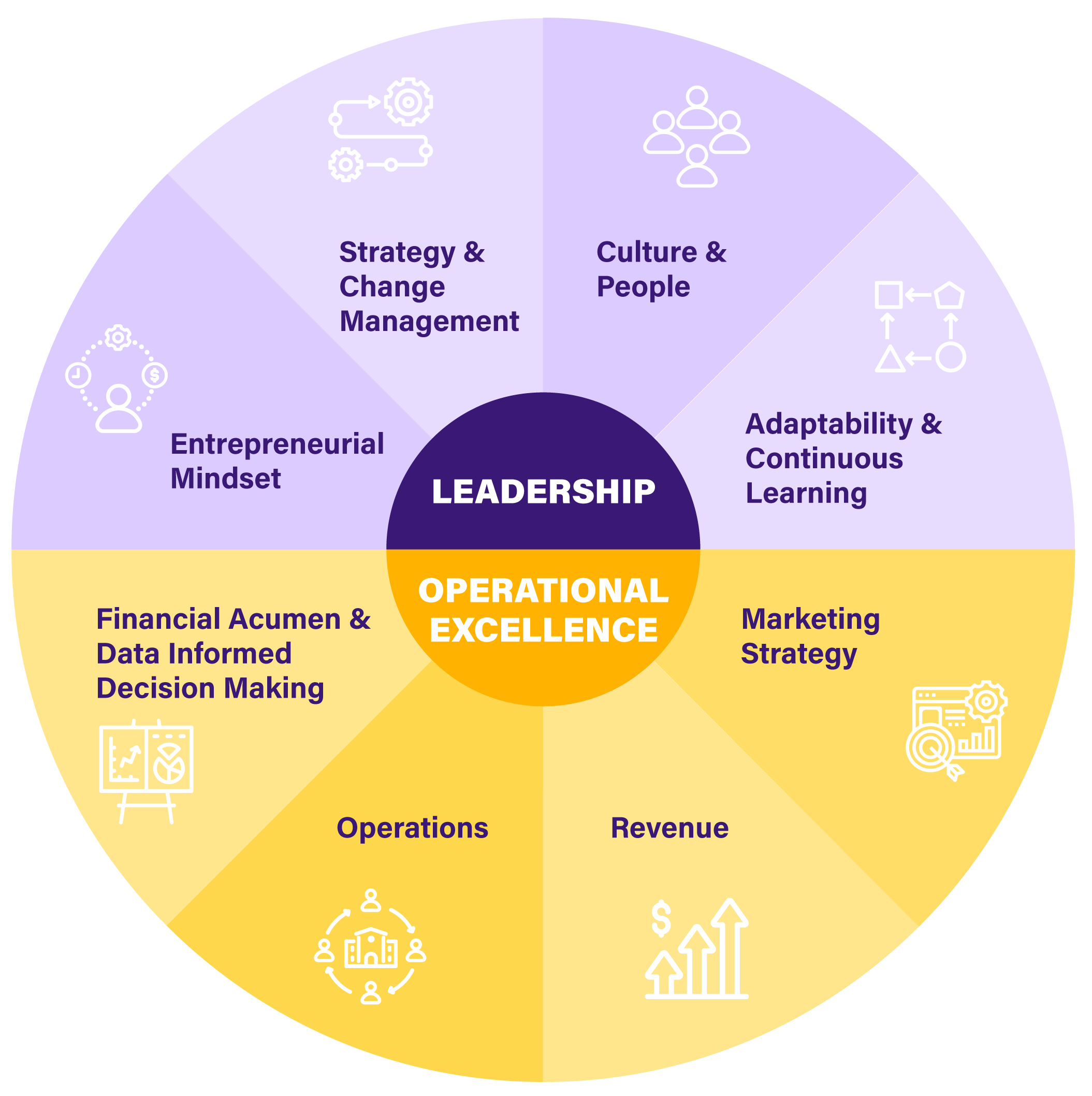
The Eight Business Competencies Every Independent School Leader Needs
Over the past eight months, I've had conversations with more than 100 heads of school and industry leaders about the independent school business model.
That listening tour was intentional. I wanted to understand, from the people doing the job, where the gaps actually are. Not the gaps that look obvious from the outside, but the ones that catch leaders off guard after they're already in the seat.
One question drove most of those conversations: what skills do you wish you had developed sooner, or had to develop quickly once you started?
The answers were consistent enough that a clear pattern emerged. And that pattern became the foundation for everything I've built inside Moonshot Lab.
Why a Framework Matters
Heads of school step into one of the most demanding leadership roles in any sector. The educational side of the job typically comes with years of preparation. The business side rarely does.
Budgeting, enrollment strategy, marketing positioning, board relations, operational efficiency, revenue development: these aren't skills most school leaders were formally trained in. They're expected to develop them on the job, under pressure, in real time.
A framework doesn't solve that problem on its own, but it gives leaders a common language for the work and a clear picture of where to focus their development. That's what these eight competencies are designed to do.
I've organized them into two categories: Leadership and Operational Excellence. Both matter. Neither is optional.
If you want to see where you stand across all eight before reading further, the Business Competency Self-Assessment takes about ten minutes and gives you a concrete baseline to work from.
Leadership Competencies
Entrepreneurial Mindset
Identifies opportunities and launches impactful programs.
Leaders with an entrepreneurial mindset see possibilities that others walk past. They're willing to take calculated risks, launch new initiatives, and pursue opportunities that can meaningfully strengthen the school's position without losing sight of the mission.
This isn't about being reckless. It's about having the confidence and curiosity to ask what else is possible, and the discipline to evaluate those possibilities rigorously before committing.
Strategy and Change Management
Skilled at crafting strategy and leading change with agility.
Effective school leaders are strategic thinkers who can build a clear, compelling vision for where the school is headed. But strategy without execution is just planning. Leaders who excel here also know how to lead change, bringing their teams and boards along rather than leaving them behind.
This competency sits at the top of the framework for a reason. Without clear strategy, the other seven competencies don't have a direction to serve.
The work I do with schools through the Strategy + School Operating System is built around exactly this: helping leadership teams move from strategic clarity to consistent execution, quarter after quarter.
Culture and People
Inspires and develops culture and talent through empathy and leadership.
A school's greatest asset is its people. Leaders who invest in culture and talent development build organizations that can sustain high performance over time, not just during the leader's tenure.
This competency is about more than managing people well. It's about creating the conditions where faculty and staff are motivated, supported, and growing. That environment doesn't happen by accident. It's built through intentional leadership.
Adaptability and Continuous Learning
Champions adaptability and lifelong learning, expanding skills and networks.
The independent school market is shifting. The demographic picture, the competitive environment, the expectations of families, the role of technology in operations and instruction: all of it is in motion. Leaders who commit to their own continuous learning model that behavior for their organizations and keep their schools from getting caught flat-footed.
This is also about intellectual humility. The leaders who navigated the past several years well weren't necessarily the ones with the most experience. They were often the ones most willing to learn and adapt in real time.
Operational Excellence Competencies
Financial Acumen and Data-Informed Decision Making
Makes strategic, data-informed decisions, understanding business essentials.
This is the competency that comes up most often in my conversations with heads of school. Financial fluency, the ability to read a budget, understand a balance sheet, think critically about revenue and cost structure, and make decisions grounded in data rather than instinct, is foundational to sustainable leadership.
Schools can't afford to have this expertise sit only with the CFO. The head of school needs to be a credible financial partner, capable of engaging the board, making the case for investment, and identifying risk before it becomes a crisis.
The Business Model Retreat is designed as a starting point for this kind of rigorous examination, helping leadership teams build a shared, honest picture of where the school stands financially and operationally.
Operations
Ensures the school and its ecosystem operate efficiently, aligning with the mission.
Operational excellence is the infrastructure that makes everything else possible. When daily functions run smoothly and efficiently, leaders have the bandwidth to focus on strategy and growth. When they don't, the school burns energy on problems that shouldn't exist.
This competency is also about alignment. Operations that serve the mission look different from operations that have simply accumulated over time. Effective leaders periodically examine whether the way the school operates is actually supporting where it's trying to go.
Advancement and Enrollment Management
Expert in advancement and enrollment strategies, driving school revenue.
For most independent schools, tuition and philanthropy are the two primary revenue drivers. Leaders who understand enrollment strategy, fundraising and development, and auxiliary revenue streams are better positioned to build the financial stability the school needs to pursue its mission.
Advancement and enrollment aren't just the responsibility of the admissions director and the head of development. They're leadership competencies. The head of school who understands this work, supports it intelligently, and integrates it into broader strategic thinking is an enormous asset to the teams doing it.
Marketing Strategy
Learns and applies marketing principles to optimize engagement and retention.
In a competitive market, the schools that can clearly articulate their value and effectively reach the right families have a real advantage. Marketing is no longer optional or peripheral. It's a leadership function.
This doesn't mean the head of school needs to be running social media campaigns. It means understanding how families make decisions, what makes your school's story compelling, and how to position the school's strengths in ways that resonate with the people you're trying to reach.
The Full Picture
These eight competencies don't exist in isolation. They reinforce each other. A leader with strong financial acumen makes better strategic decisions. A leader with an entrepreneurial mindset is better positioned to find the revenue opportunities the school needs. A leader who invests in culture creates the organizational capacity to execute on strategy.
That's the point of the framework: to give school leaders a complete picture of what business fluency looks like in this context, not just a list of skills to check off.
If you're curious where you stand across all eight, take the Business Competency Self-Assessment. It takes about ten minutes and is a good starting point for understanding where to focus your development.
And I'm genuinely curious: which of these competencies do you think is most critical for building financially sustainable schools? Which ones are you actively working on? I'd like to hear what's on your mind.