
A Leadership Lesson From the World’s Best Restaurant
What Two Words Would Define Your School's Mission?
A lesson from Unreasonable Hospitality on the power of simplicity
Why Every Independent School Leader Should Read Unreasonable Hospitality
I don't recommend books often. But when I do, it's because something in it reframes the way I think about leadership, and I can't stop sharing it.
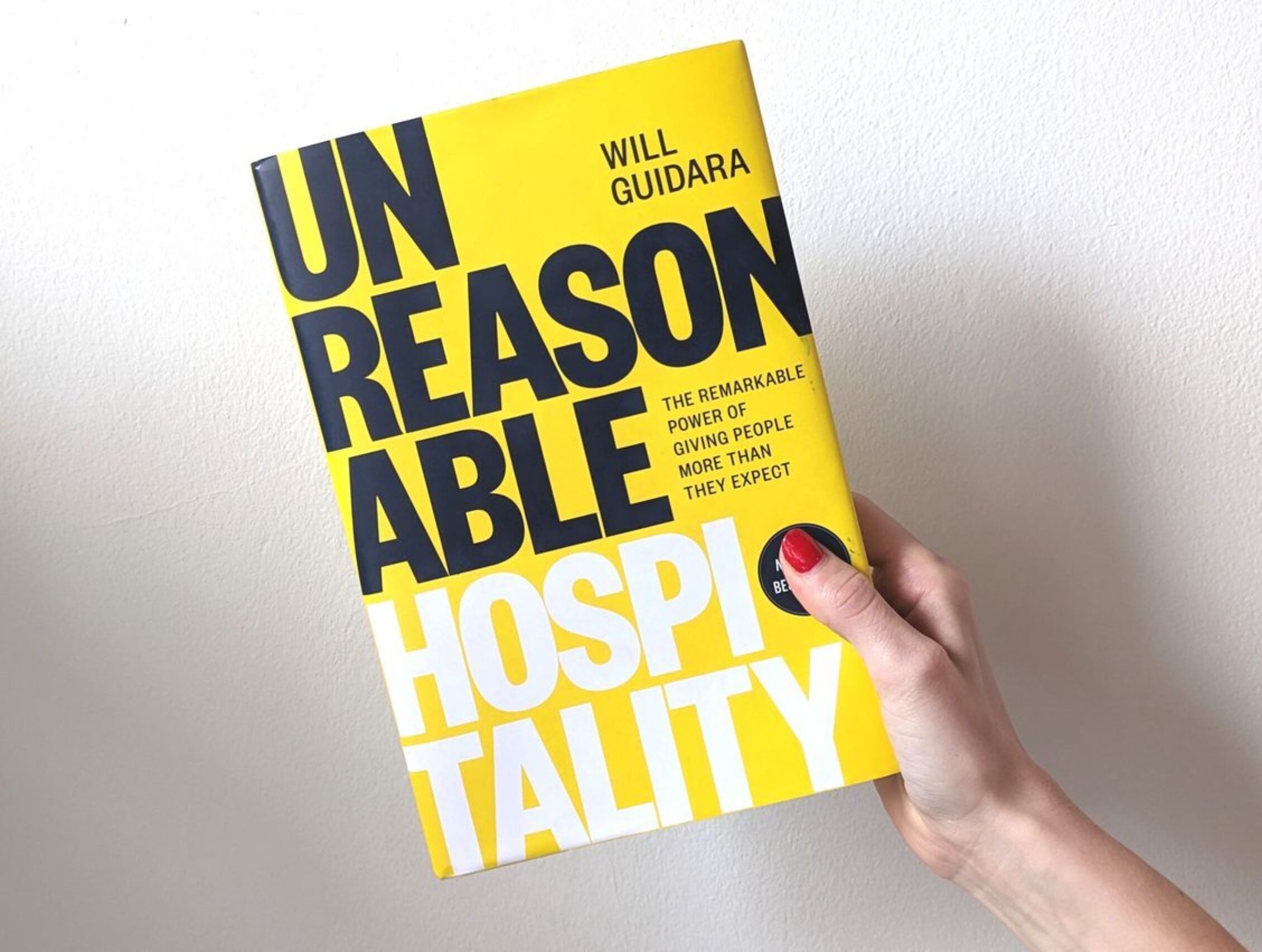
Unreasonable Hospitality by Will Guidara is one of those books.
Guidara is the former co-owner of Eleven Madison Park, the New York restaurant that rose to become the best in the world. The book chronicles how he and his team built something extraordinary, not just by cooking remarkable food, but by obsessing over how every guest felt when they walked through the door.
Their philosophy was simple: make people feel truly seen, valued, and cared for beyond what they expected. Guidara calls this "unreasonable hospitality," and it became the engine behind everything they did.
If you haven't read it yet, put it on your list. Independent school leaders will find more relevant leadership lessons in this book than in most education-focused titles on the shelf.
The Mission Statement That Was Holding Them Back
Here's the part of the book that stopped me.
A Statement That Tried to Say Everything
As Eleven Madison Park pushed toward the final leap to world number one, they had a mission statement that tried to capture everything: excellence, teamwork, creativity, purpose. It felt complete. It felt right.
And yet something was off.
The more they sat with it, the more they realized it was actually making their work harder, not easier. A mission that says everything ends up guiding nothing. When you're in the middle of a dinner service, or a difficult conversation with a parent, or a board meeting that's gone sideways, you need something you can hold on to.
The Decision to Simplify
So they stripped it down.
They asked themselves: what are the two words that capture everything we stand for?
The answer they landed on was this: delicious and gracious.
Two words. That's it. Everything else was downstream from those two.
That decision didn't diminish their mission. It clarified it. And clarity, it turns out, is one of the most powerful things a leadership team can have.
What This Has to Do with Independent Schools
I've been sitting with that moment since I read it.
The Trap of the All-Encompassing Mission Statement
Schools are particularly vulnerable to this. The pressure to honor tradition, please constituents, reflect values, articulate purpose, and differentiate from competitors all in a single paragraph is real. And so mission statements end up dense, committee-crafted, and ultimately forgettable.
Nobody goes back to them when a real decision has to be made.
That's not a criticism of the people who wrote them. It's a structural problem. When a statement tries to serve too many masters, it stops serving any of them well.
The Alternative: Clarity Through Subtraction
What Guidara modeled isn't a rebranding exercise. It's a discipline.
The discipline of subtraction asks: if we took away everything that's nice to say, what would remain? What are the two load-bearing words that, if removed, would cause the whole thing to collapse?
That's a harder question than it sounds. It requires real conversation, real disagreement, and real courage to let go of language that feels important but doesn't actually drive decisions.
The Exercise I've Been Running on MoonshotOS
Reading that chapter sent me straight into my own thinking.
What Are My Two Words?
If I had to distill MoonshotOS down to two words right now, I'd land on curiosity and impact.
Curiosity to keep asking harder questions about how independent schools work as businesses, and to help leaders develop a genuine fascination with the numbers, models, and systems underneath the mission.
Impact through the work itself: membership, retreats, and operating systems that help schools build more sustainable business models and expand access for more students.
That's not finished thinking. It may shift. But it's a useful starting point because it forces me to check every decision against those two ideas. Does this deepen curiosity? Does this move the needle on impact? If the answer to both is no, I probably shouldn't do it.
Why This Kind of Clarity Matters for Leaders
The heads of school I respect most don't lead with complexity. They lead with conviction. They can articulate what their school stands for in a sentence or less, and every major decision they make reflects that clarity.
That's not an accident. It's something they've worked toward, often through exactly this kind of subtractive thinking.
How to Run This Exercise with Your Leadership Team
This isn't just a thought experiment. It's a practical leadership tool.
Step One: Start with Your Current Mission
Pull it up. Read it out loud. Notice what resonates and what feels like obligation. Most mission statements contain a core truth buried underneath the language added to please various stakeholders. Your job is to find it.
Step Two: Ask the Subtractive Question
If we had to remove two-thirds of this, what would we keep? What words, if lost, would mean we were describing a completely different school?
Give everyone on your leadership team time to answer that individually before you discuss it as a group. The divergence in answers is often more revealing than the answers themselves.
Step Three: Test Your Candidates Against Real Decisions
Take the two or three word candidates that surface and pressure-test them. Think about a significant decision you made in the last twelve months. Does your candidate mission clarify that decision or muddy it? A strong two-word mission should make at least some decisions easier, not harder.
Step Four: Sit with the Discomfort
You probably won't land on two words in a single session. That's fine. The goal isn't to produce a deliverable by lunch. The goal is to start a conversation that gets your leadership team thinking about what actually drives the school, beneath the language you've inherited.
The Deeper Leadership Lesson
Guidara didn't simplify Eleven Madison Park's mission because things were going badly. He did it because he understood that clarity compounds.
When everyone on a team knows what the two load-bearing words are, small decisions get faster, alignment improves, and energy stops getting spent on the wrong things. That's not a restaurant-industry idea. It's a leadership principle that applies to any organization trying to do hard, meaningful work.
Independent schools are doing hard, meaningful work every day. The leaders running them deserve tools that make that work clearer, not more complicated.
Sometimes the most powerful strategic move isn't adding something. It's taking something away.
One Question Worth Sitting With
If you had to distill your school's mission into two words, what would they be?
Not the official version. Not the committee version. The real one, the one you'd write on the whiteboard if nobody was watching.
That's worth knowing.