
Your Classrooms Sit Empty 80% of the Time. Here's What to Do About It.
I had a conversation with Gardner Barrier of Gardner Barrier Consulting on the Independent School Moonshot podcast (The Mindset Shift That Changes How Schools Make Financial Decisions) that I keep coming back to. We were talking about portfolio management inside of schools, and he made an observation that stopped me cold.
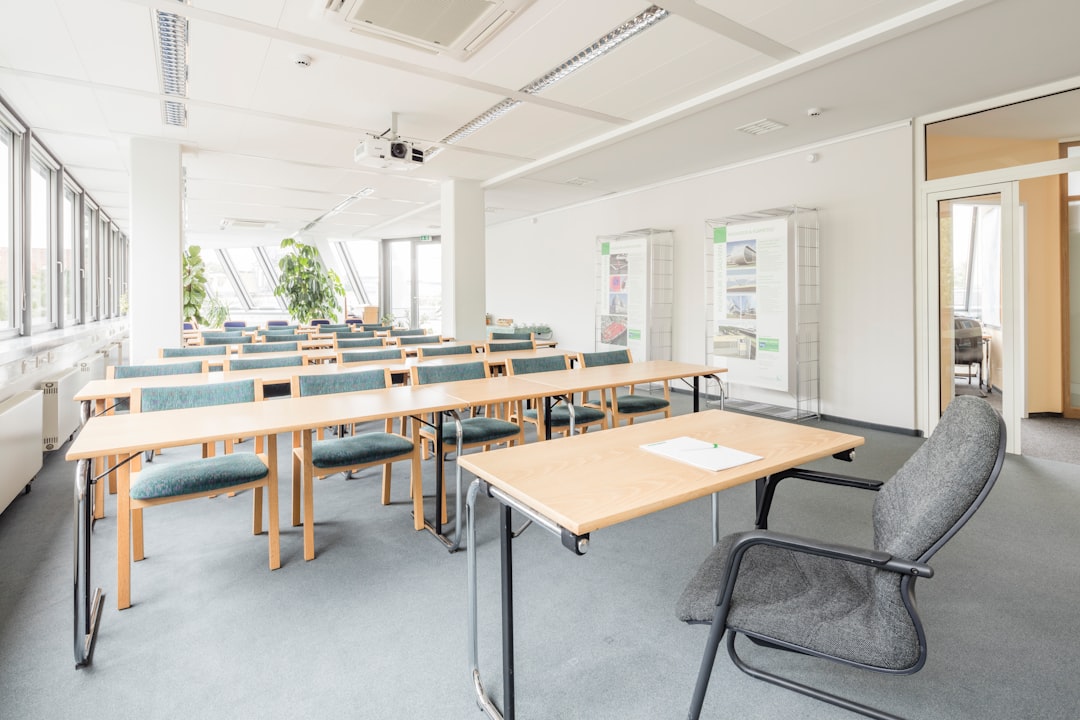
He said: if you walk into any classroom on your campus and really look at its utilization, it's being used about 20% of the time. School year only. School day only. Everything else is dark.
Go stand in your art room at 8pm on a Tuesday in July. The science lab is locked. The gym is empty. The stage hasn't seen a performance in two months. Every square foot of it is sitting idle.
You're paying for all of it. Insurance, maintenance, utilities, debt service if you have it. The campus that drives your mission is doing nothing for roughly 80% of the hours in a year.
That's not a criticism. It's just the math. And once you see it, you can't unsee it.
The Utilization Math Nobody Talks About
Gardner's 20% observation holds up when you run the numbers.
A standard school day is about seven hours. A standard school year is 180 days. That's 1,260 hours of active use against 8,760 available hours in a calendar year. The utilization rate is roughly 14%. Add after-school programming and some weekend use and you might get to 20%. Either way, the number is striking.
Schools are built around a specific schedule, and that schedule serves a real purpose. But the gap represents opportunity that most schools haven't named yet.
What would moving from 20% to 25% utilization mean for your revenue picture? What would it mean for how much pressure rests on your enrollment numbers every fall?
A Different Way to Think About the Problem
Before we get into tactics, there's a mindset shift worth making.
The schools doing this well aren't improvising. They have a clear sense of what they're trying to build and why.
Tuition is the foundation. It's the dominant revenue stream and it should be. But a foundation with no diversification carries a lot of risk. When enrollment softens, there's no cushion. Every shortfall hits the same way.
The goal of building non-tuition revenue isn't to become a conference center. The goal is to reduce fragility. A school drawing 95% of revenue from tuition and losing 15 students in a single grade has very little room to absorb it. A school with diversified revenue streams has options.
One question worth putting to your board directly: what is your target tuition dependence percentage, and are you managing toward it? Most schools don't have a clear answer. The ones that do tend to make better capital and program decisions.
What's Actually Possible
There are four categories worth considering. The right fit depends on your market, your facilities, and what your community actually needs.
Community partnerships. Think about who in your area lacks access to what you have. Gardner shared an example that stuck with me: a school partnering with a local retirement community to hold pottery classes in the art room on Tuesday evenings. The retirees get access to a space the retirement home doesn't have. The school generates modest revenue. And the goodwill that comes from being a genuine community asset has a long-term value that doesn't show up on a balance sheet right away, but it shows up.
Other possibilities in this category: homeschool co-ops using your science labs on weekends, local nonprofits holding evening sessions in your meeting rooms, youth sports organizations renting your fields during the off-season.
Extended programming. Many schools run summer camps. Fewer run programming over winter break, which leaves three weeks of campus sitting idle during a stretch when parents are still working. A well-run winter break program has real demand. Gardner mentioned a simpler version of the same idea: a New Year's Eve lock-in that served students, gave parents their evening back, and made money without requiring significant infrastructure.
Adult and continuing education. This one connects most directly to mission. Most school mission statements mention lifelong learning, curiosity, or community in some form. And yet most schools stop offering programming at graduation. Evening classes, alumni programming, and parent learning series extend what your school does into a broader population it already serves.
David Sullivan, who leads auxiliary strategy work at SPARC and was previously head at Breakwater School in Portland, Maine, built this out to the point that it changed how the school defined itself. Breakwater developed such a robust after-school and adult education program, serving not just enrolled students but the broader community, that the school eventually reclassified as a learning institution. That won't be the right move for every school. But the underlying principle is sound. If your mission is about learning, why does it stop at 3pm?
Thought leadership and professional development. Schools with strong reputations in particular disciplines have real IP to offer. Hosting teacher training, professional development workshops, or peer school conferences positions your campus as a hub, generates modest revenue, and builds relationships that pay off in other ways over time.
Don't Skip the Cost Side
Auxiliary revenue looks better on paper than it sometimes performs in practice.
Every additional use of your campus has real costs: wear and tear, staffing, insurance, coordination overhead, and the staff time required to manage something nobody was hired to run. The juice has to be worth the squeeze, and that calculation is different at a 200-student school than at a 900-student school.
Before you commit to anything, model both sides honestly. What does it actually cost to run this program? What's the realistic demand in your specific market? A $10,000 winter break camp might be a meaningful contribution at one school and not worth the trouble at another.
A useful filter: start with programs that serve your existing families. The infrastructure for communication, trust, and logistics is already there. You're extending something rather than building something new.
A Resource Worth Knowing
If your school is serious about building out auxiliary strategy, SPARC is where the practitioners in this space live. The Summer Programs and Auxiliary Revenue Collaborative is the premier national organization focused exclusively on this work. They offer advisory services, professional development, data on what's working at peer schools, and a peer community for summer program directors, after-school leaders, and school leadership teams. If you want to know what's actually working at peer schools, SPARC is the place to find out. Learn more at sparcnational.com.
Where to Start
You don't need a task force to take a first step.
Walk your campus this week and do a simple asset audit. Every physical space. Its current utilization. What would it take to open it to outside use, even occasionally? You're not committing to anything. You're just building a map of what you have.
From there, identify two or three categories where there's plausible demand in your local market. Not everywhere. Not everything. Pick the options that fit what your community already values and what your team has the capacity to actually run.
Run one small pilot. Don't build infrastructure around it first. Prove the demand, run the numbers, and let the results tell you whether it's worth expanding.
Then bring this to your board as a standing strategic conversation, not a crisis response. What should your tuition dependence target be? How are you managing toward it? Most boards aren't having that conversation. The ones that are tend to be better positioned when enrollment gets bumpy.
The Bottom Line
This isn't about turning your school into a revenue machine. It's about being a good steward of what you already have.
The facilities exist. The capacity is there. The question is whether you're willing to look honestly at which assets are working and which ones are sitting idle.