
Higher Ed’s Challenges and Independent Schools’ Opportunities
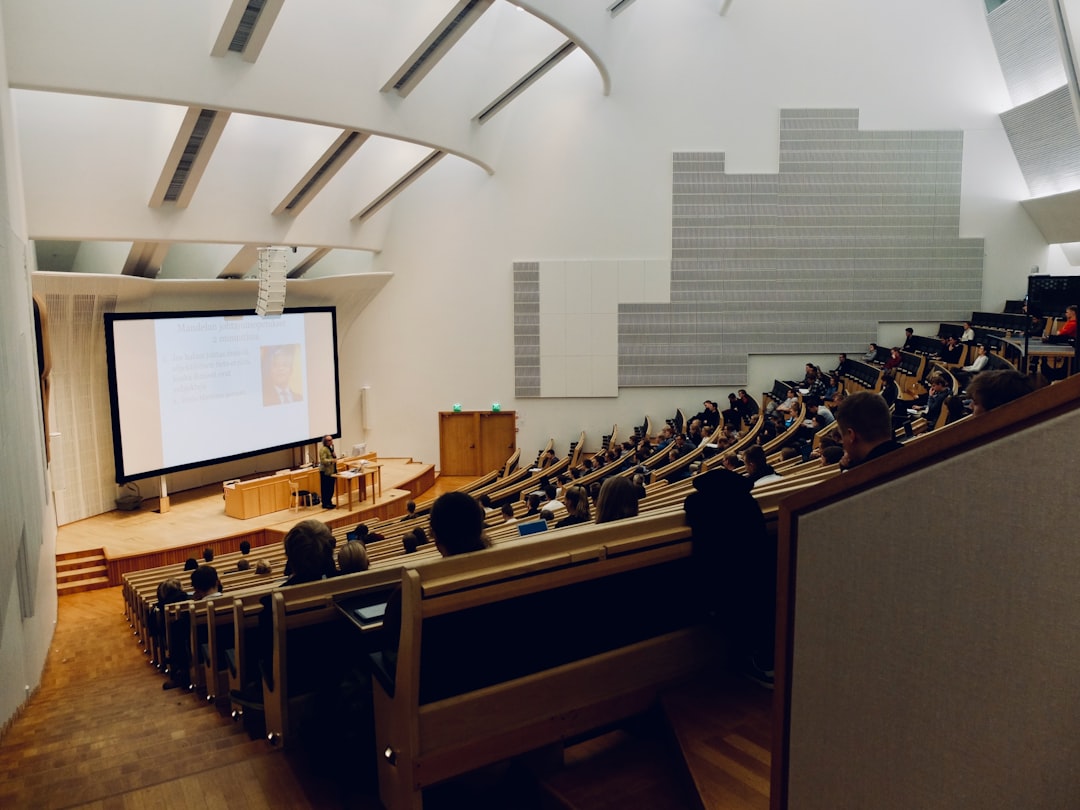
"Let's take our cues from higher ed. Inevitably, what they're doing will trickle down to independent schools."
I would be very wealthy if I had a nickel for every time I heard some version of that.
But here's the problem. Do we actually want to follow their path?
Because the last time I checked, higher education is facing some serious headwinds of its own.
What Higher Ed Is Actually Telling Us
Brian Rosenberg, former 17-year president of Macalester College, makes this case compellingly in his piece for the Chronicle of Higher Education, "Higher Ed's Ruinous Resistance to Change." The article sits behind a paywall, though the Chronicle allows a limited number of free articles per month, and it is worth reading.
Rosenberg identifies four macro-level issues facing the higher education business model that should sound familiar to anyone leading an independent school:
The cost of providing services at a traditional college or university is very high and has risen faster than inflation for decades. At all but a handful of institutions with enormous endowments, revenue from student funds accounts for the majority of that cost. There are not enough students willing and able to pay the full cost. And there are not enough students, period.
That is not a description of a model that has figured things out. That is a description of a model under serious structural stress.
Two Takeaways Worth Sitting With
I encourage you to read the full piece, but let me share the two themes that stuck with me most.
The Pull of the Status Quo Is Powerful and Dangerous
Even after COVID forced widespread disruption, Rosenberg documents how the magnetic pull toward the old ways proved nearly irresistible for many institutions. Innovative approaches that emerged out of necessity were quietly abandoned as soon as conditions allowed a return to normal.
He argues that changing age-old practices, from teaching methods to academic calendars, is not just necessary. It is a step toward survival. The lecture model, for example, needs to give way to more active, hands-on approaches to learning. It is not a coincidence that institutions like Northeastern, which have embraced experiential learning and stronger connections between education and work preparation, are performing well while others struggle.
The lesson for independent schools is not that we need to copy Northeastern. It is the instinct to revert to familiar patterns when pressure eases that is a real risk, and leaders need to name it and resist it.
Financial Sustainability Requires More Than Optimism
Rosenberg cites a finding from Inside Higher Education's 2023 survey of college and university presidents that stopped me in my tracks. Nearly 80 percent of presidents believe their institution will be financially stable over the next decade. At the same time, 72 percent believe their institution needs to make fundamental changes to its business model, programming, and operations.
Those two beliefs are in direct conflict. You cannot simultaneously believe the current path is fine and that fundamental change is necessary. One of those beliefs is doing the work of managing anxiety, while the other reflects what leaders actually know to be true.
Independent school leaders are not immune to the same tension.
Where Independent Schools Have an Advantage
I want to be fair here. There are things worth borrowing from higher education, particularly in student recruitment, where many institutions are genuinely pushing the envelope. This is not an argument for dismissing everything they do.
But the instinct to treat higher ed as the revered older sibling who has it figured out is no longer warranted, if it ever was.
Where independent schools have a real advantage is in nimbleness. We carry overhead, no question. But we are not weighed down by the scale, the governance complexity, or the institutional inertia of large universities. We can move faster. We can make decisions that would take years to work through a faculty senate and board of trustees at a research university.
That agility is an asset. The question is whether we are actually using it.
What This Means for Independent School Leaders
The NAIS Research 2023 Hot Issues Survey puts a number on what I hear in conversations with heads of school across the country. Among 310 heads surveyed, 91 percent identified ensuring the school's sustainability as one of their top challenges.
That consensus is striking. And it points to an opportunity.
The paths to answering the sustainability question will look different from school to school. But the foundational skills required to navigate it should not. Business acumen, entrepreneurial thinking, financial literacy, and the ability to build and execute strategy are no longer nice-to-haves for school leaders. They are the job.
That is the belief at the core of MoonshotOS, and it is why I built it: to equip independent school leaders with the business and entrepreneurial skills, systems, and peer community to build financially sustainable schools. If you want to explore what that looks like in practice, the Moonshot Lab is where that community lives, and the Business Model Retreat is where the work often starts.
The higher education story is a cautionary tale, not a roadmap. Independent schools have the opportunity to chart a different course. But that requires committing to the kind of leadership development and business-model thinking that make real change possible.
One final note: Rosenberg recently published a book expanding on these ideas, "Whatever It Is, I'm Against It": Resistance to Change in Higher Education. If this topic interests you, it is worth picking up a copy.
I would love to hear your takeaways on Rosenberg's work or on what you are seeing at your own school.